Question: The quote below is from Ramji’s book ‘ Meditation: Enquiry into the Self’ page 43 in my eBook Imagine this situation: “On the...
Satsang is a compound Sanskrit word that means “keeping the company of the Self.” The Self, Awareness, is the true nature of everyone and one keeps company with it by continually meditating on it in many ways. One of the most effective methods involves discussing non-dual teachings with someone whose knowledge of his or her identity as Awareness is doubt-free, to get clarity with reference to Self inquiry. The satsangs posted here are answers to the questions of many people around the world who are interested in enlightenment and committed to Vedanta as their preferred means of Self knowledge.
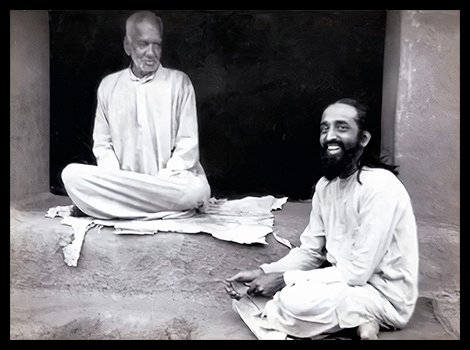
Now that Vedanta is well known in Western spiritual circles, it has become commonplace for unqualified “teachers” to identify with it. A qualified teacher is called a mahatma, someone immersed in the Vedic tradition who has been taught the methodology by someone who has been properly taught in an unbroken chain of teachers, through Shankaracharya, back to the Upanishads, the source texts themselves. My teacher, Swami Chinmaya, seen here with his teacher, Swami Tapovan Maharaj, satisfies this qualification. I have not strayed from the tradition since my introduction to it in 1968 and teach traditional Vedanta, although not in the traditional monastic format.
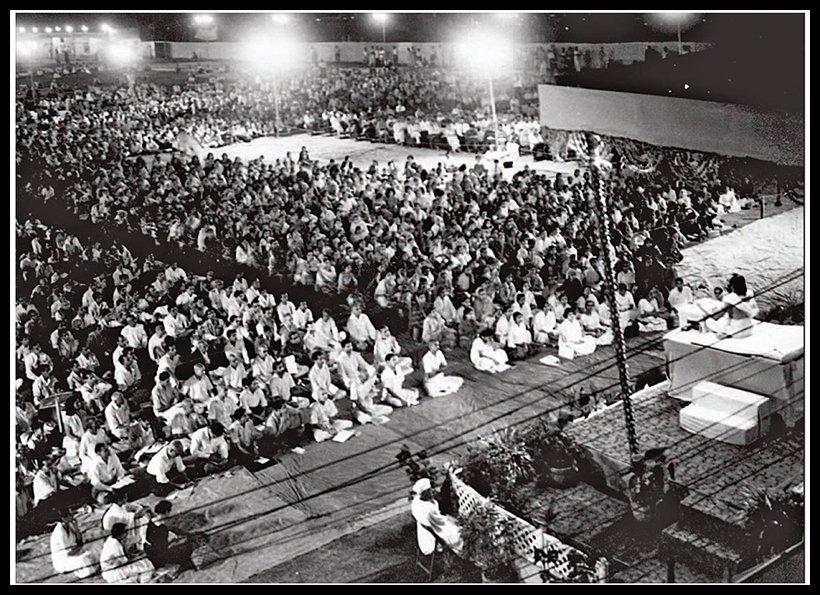
Chinmaya Teaching in a Traditional Setting
The process of Superimposition responsible for theconfusion of the apparent reality with awareness. Ignorance is not ‘bad’ although it may have unpleasant consequences. In...
44. When the mind achieves identity with the name, quality and knowledge of a subtle object it is called savichara samadhi. When the mind...
Dear James, The third verse of the last chapter of the Patanjali sutras says, “Good deeds or bad deeds are not the direct cause...
Dear Ramji It was fantastic to participate in your webminar this past weekend. I really enjoyed it. Thank you and Sundarifor making it...
Peter: In reading back our conversations, and seeing your answers, I see my questions/assumptions – probing, like a ‘uh?’ to ‘ah!’ 🙂 Maybe there...
Dear Sundari, I have just read your beautiful satsang on grief and was very heartened by it. I had a conversation on the topic...
The Dharma talks are wonderful, Ramji, thank you so much. It’s great to see you in good health, going strong. It so funny...
Greetings Ramji I read this morning that lovely satsang by Shankar that was posted today. It must be so satisfying to see the teaching...
Dear Beloved Sundari and Ramji Without missing anything, I miss you a lot. How are you? I hope very much to meet you...
Peter: Most significant was your suggestion that I return to examining Sravanna, Manana and Nidihyasana…and I have read your article on those 3 stages...
Peter: I write as someone who has been actively studying and applying Advaita knowledge for a few years with another teacher, though James was...
Paul: I have recently lost my mom after a long and protracted illness. Her death seemed so unnecessary, painful, and unfair. I am struggling...
“There is no good and no evil. In every concrete situation there is only the necessary and the unnecessary. The needful is right, the...