April 18, 2018
Amy:Until this spring, with you, I had not fully surrendered. I have now, and life has opened up in a new way. Ramji:Have you...
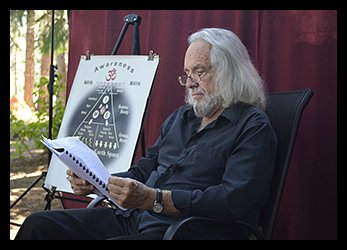
Satsang is a compound Sanskrit word that means “keeping the company of the Self.” The Self, Awareness, is the true nature of everyone and one keeps company with it by continually meditating on it in many ways. One of the most effective methods involves discussing non-dual teachings with someone whose knowledge of his or her identity as Awareness is doubt-free, to get clarity with reference to Self inquiry. The satsangs posted here are answers to the questions of many people around the world who are interested in enlightenment and committed to Vedanta as their preferred means of Self knowledge.
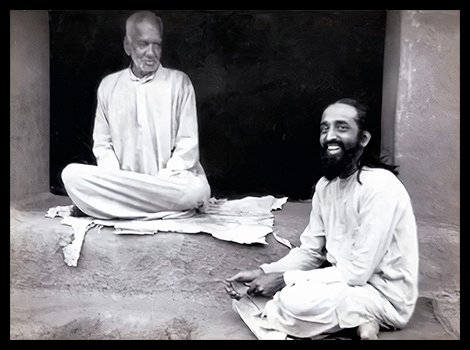
Now that Vedanta is well known in Western spiritual circles, it has become commonplace for unqualified “teachers” to identify with it. A qualified teacher is called a mahatma, someone immersed in the Vedic tradition who has been taught the methodology by someone who has been properly taught in an unbroken chain of teachers, through Shankaracharya, back to the Upanishads, the source texts themselves. My teacher, Swami Chinmaya, seen here with his teacher, Swami Tapovan Maharaj, satisfies this qualification. I have not strayed from the tradition since my introduction to it in 1968 and teach traditional Vedanta, although not in the traditional monastic format.
Amy:Until this spring, with you, I had not fully surrendered. I have now, and life has opened up in a new way. Ramji:Have you...
Vandana:I have been reading about Vedanta and find it very effective in daily life. I would like to make an effort to design a...
Robert:Please tell me what can I do to became qualified Vedanta teacher and make this beautiful knowledge available to “others” and in that process...
Mike:At first glance, it seems from the Hindu perspective that the array of gods is somewhat out there and dismissed. Hence my moving forward...
Samantha:Can you tell me more about how the enneagram relates to Vedanta? James once allowed a friend of his to give a talk on...
Adapted from theAstavakra Samhita,Chapter XVII, by Dave Coryell He has gained the fruit of knowledge who, contented and free of the senses, enjoys being...
Elliot:Hello, Sundari! I’ve got a new question rising in my mind recently, and please do correct me if I misunderstood something: To be simple,...
Martin:Hello. In one of thesatsangs,Ram tells Peggy that she has the humorsiddhi,that she can generate it almost at will and work it on other...
Sundari:Hello, Jonathan, I replied in detail to your inquiry regarding the aptly named “Blisslove,” and for some reason it did not save. I don’t...
Santoz:I have read a bit of Vedanta and have written my understanding of it based on what I have read. Please read it and...
Jim:Hello,Sundari, I just would like to express my deep gratitudeofthe work that you and James are doing in teaching Vedanta. I first came to...
Sarah:What is the difference between the mind and the intellect? Sundari:The mind is a complex object. It is a function of the subtle body...
Sandra:Thank you so much for your help with thesatya-mithyateaching. Please, can you explain the difference between Self-knowledge and object-knowledge? Sundari:To have the thought that...
Donald:consciousness needs no validation: double-edged sword, possibly; on one hand, it’s a profound statement, and on the other, delusional? It’s, as an example, a...
Francis:Hello, Sundari. It took a while to realize what you wrote to me. It must sink in and I must digest it before I...